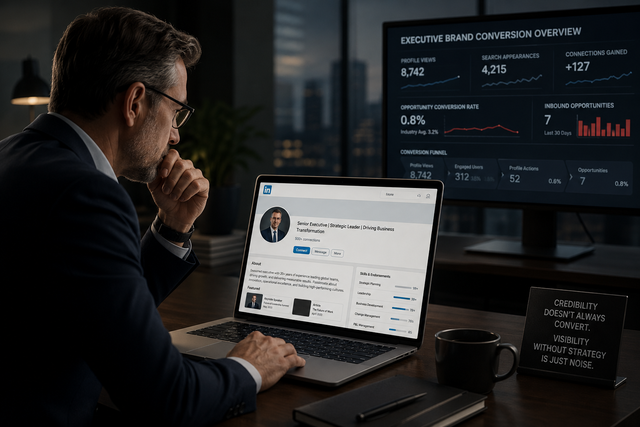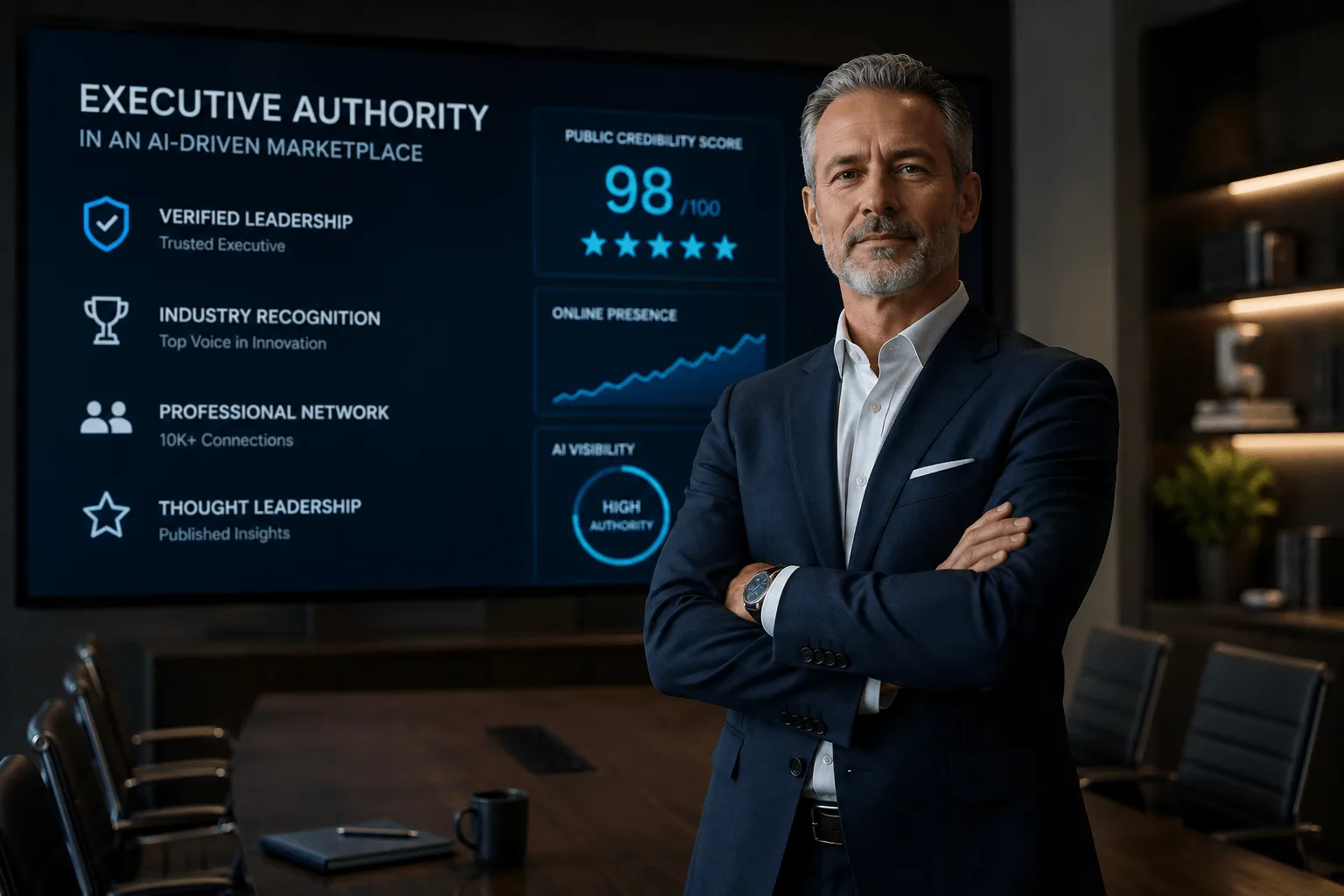

The biggest barrier to executive visibility isn’t an algorithm. It’s permission.
Over the years, I’ve seen the same pattern surface repeatedly in conversations with executives and founders: the people with the most expertise are often the most hesitant to share it. Being visible can still feel like bragging, “look at me” energy, or unnecessary exposure. For leaders whose reputations, companies, employees, and careers are attached to what they say publicly, staying quiet can feel safer.
But the hesitation to be seen doesn’t necessarily disappear as you become more successful. According to Korn Ferry research, 71% of U.S. CEOs report experiencing impostor syndrome, along with 65% of senior executives, compared with 33% of early-career professionals.
In other words, the doubt doesn’t always shrink as you rise. Sometimes it scales with you.
More responsibility brings more scrutiny. More visibility means more people watching. So experienced leaders can find themselves questioning whether they have enough authority to speak publicly, even after spending decades building that authority.
The result is an enormous disconnect between the expertise someone possesses and the expertise the outside world can actually see.
The Cost of Staying Quiet
There was a time when a title could do much of the work for you. You were the CEO, COO, president, or founder, and your position established a certain amount of authority.
Today, people have access to far more information before they ever enter a conversation with you. Potential clients search your name. Investors research founders. Candidates research leadership teams. Journalists look for credible experts. Conference organizers research potential speakers. Prospects want to understand how you think before deciding whether they want to work with you.
Increasingly, AI systems are also interpreting publicly available information when people research individuals, companies, and topics.
That means your expertise can be extraordinary, but if there is little evidence of it outside of your résumé or LinkedIn job history, the outside world has very little context for understanding what you actually know.
This is why executive visibility is no longer simply about “building a personal brand.” It is about making your expertise discoverable.
Research from KPMG found that 75% of female executives surveyed had experienced impostor syndrome during their careers. When qualified people continually hold back because they don’t want to appear self-promotional, their experience stays trapped inside meetings, client conversations, emails, and their own heads.
Meanwhile, someone else becomes associated with the ideas they already understand. Someone else gets invited onto the podcast, quoted in the article, brought into the conversation, or discovered when someone searches for expertise in their category. Not necessarily because that person knows more, but because they made what they know visible.
When Expertise Becomes Leadership
One of the most common things I hear from executives is, “I don’t want to sound self-promotional.” Another version is, “Who am I to talk about this?”
The reframe I give clients is simple: the moment your story becomes useful to someone else, it stops being self-promotion and starts becoming leadership.
Think about the leaders you follow and respect. Chances are, you learned something from them because they were willing to share an experience, mistake, observation, or lesson that helped you make a better decision. You didn’t necessarily see it as bragging. You saw it as useful.
Imagine you’re a COO who has spent years fixing broken operations. You know the warning signs that appear when a scaling organization is about to hit a wall because you’ve lived through them repeatedly, but you’ve never written about it because talking publicly about your accomplishments feels uncomfortable.
Then you publish a straightforward article about three signals a scaling team is about to break and what your organization did before it happened. A founder dealing with that exact problem finds it, shares it with her board, and finally has language for what is happening inside her company.
That wasn’t self-promotion. That was your experience becoming useful.
And useful gets remembered, shared, cited, searched, and hired.
Your Expertise Is Already There
Most executives don’t actually have a content problem. They have a recognition problem. They don’t recognize which parts of their everyday work are worth sharing because those experiences feel ordinary to them.
If you’ve solved the same problem 100 times, the solution may seem obvious. To someone encountering it for the first time, it can be incredibly valuable.
Think about the conversations you’ve had over the last week. Someone may have asked for your advice. You may have helped a colleague navigate a difficult situation, answered the same customer question for the tenth time, changed your mind about something, or noticed a shift happening in your industry.
Those moments contain your expertise.
You don’t need to manufacture thought leadership. You need to identify the thinking you’re already doing and decide which parts could be useful to someone else.
From Executive Visibility to Searchable Leadership
There is another reason this matters now. Visibility is no longer happening only between people.
Search engines and generative AI systems increasingly synthesize publicly available information when people research companies, executives, products, and ideas. A single viral post isn’t the goal. The goal is to create a consistent body of evidence around who you are, what you know, what you’ve done, and the subjects you have legitimate experience discussing.
Your LinkedIn profile is one signal. Your website is another. Articles, podcasts, interviews, earned media, speaking appearances, and third-party references create additional signals. Together, they make your expertise easier for humans, search engines, and AI systems to understand.
I call this Searchable Leadership.
The question is no longer simply, “Are people paying attention to me?” The better question is: When someone goes looking for expertise like mine, is there enough evidence for them to understand why I belong in the conversation?
Impostor syndrome may tell you to wait until you feel more qualified, more certain, or more comfortable being seen. But your experience has already been earned.
You don’t need to know everything. You don’t need to become an influencer. You don’t need to turn your entire life into content.
You simply need to make enough of your thinking visible that the people who need what you know have a chance to find it.
Because visibility isn’t about convincing everyone to look at you. It’s about making sure the right people can find you when they’re already looking for what you know.
Sources
Korn Ferry, 71% of U.S. CEOs Experience Imposter Syndrome, New Korn Ferry Research Finds, 2024.
KPMG, Advancing the Future of Women in Business: A KPMG Women’s Leadership Summit Report, 2020.
Weber Shandwick and KRC Research, research on CEO reputation and external executive engagement.