
Introduction: Leadership Visibility Is the New Competitive Edge
Executives today are expected to be visible, not just successful.
Your title may open doors — but your brand keeps them open.
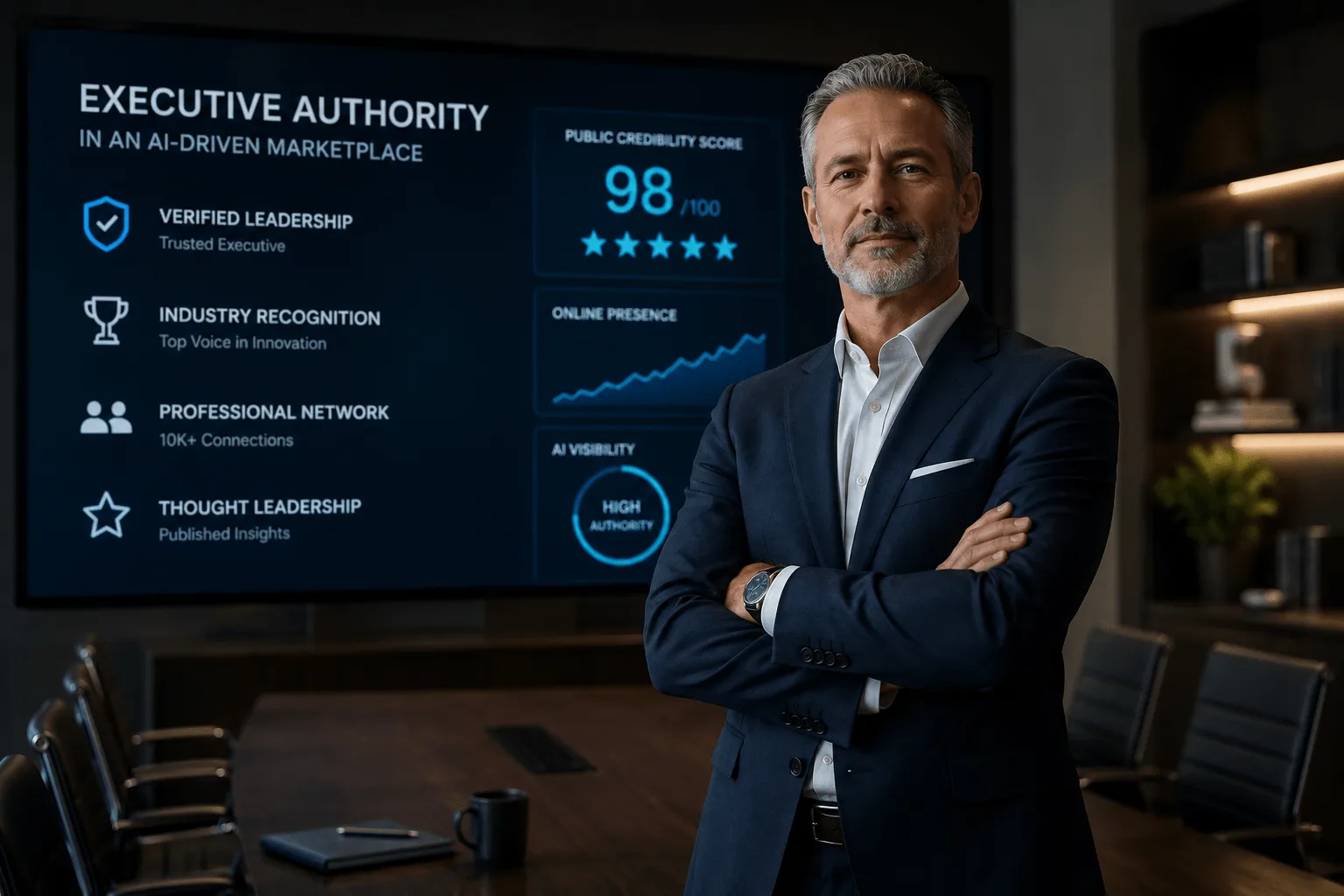
An executive brand communicates credibility, leadership style, and trust at scale.
Below are the 10 most common questions leaders ask me when they begin building or refreshing theirs.
1. What is an executive brand?
An executive brand is the public perception of your leadership identity — your values, expertise, and reputation.
It’s how investors, employees, clients, and media perceive your credibility and influence.
Your executive brand turns experience into authority.
2. How is an executive brand different from a personal brand?
A personal brand can focus on passion, lifestyle, or profession.
An executive brand aligns directly with business outcomes — credibility, trust, and visibility that drive opportunity for your company and yourself.

3. Why do executives need a visible brand?
Visibility builds trust.
People follow leaders they can see and understand.
A visible brand improves recruiting, retention, sales, partnerships, and media recognition.
It’s a strategic asset, not a vanity project.
4. Where should I show up as an executive?
Start on LinkedIn — it’s the most trusted platform for leadership visibility.
Then expand to owned media like newsletters, speaking engagements, podcasts, and press features.
Consistency across platforms builds both human trust and algorithmic recognition.

5. How do I define my executive positioning?
Positioning is what separates leadership presence from noise.
Use this formula:
“I lead by helping [audience or industry] achieve [result] through [values, innovation, or expertise].”
This statement guides everything — from bios to keynote topics.
6. How do I maintain authenticity while being strategic?
Authenticity isn’t oversharing — it’s alignment.
Be transparent about lessons learned, values, and leadership philosophy.
Pair honesty with professionalism, and you’ll build trust that feels human and intentional.
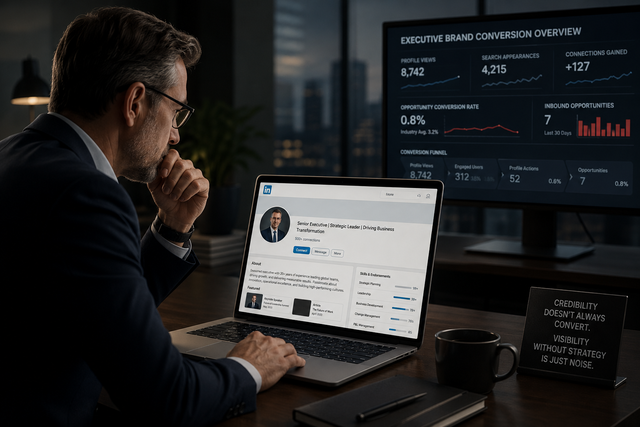
7. How do I measure the ROI of executive visibility?
Track both quantitative and qualitative results:
- Profile visits, mentions, and inbound opportunities
- Media coverage or speaking invitations
- Team morale and company visibility metrics
Visibility is measurable — and when done right, it drives influence and revenue.
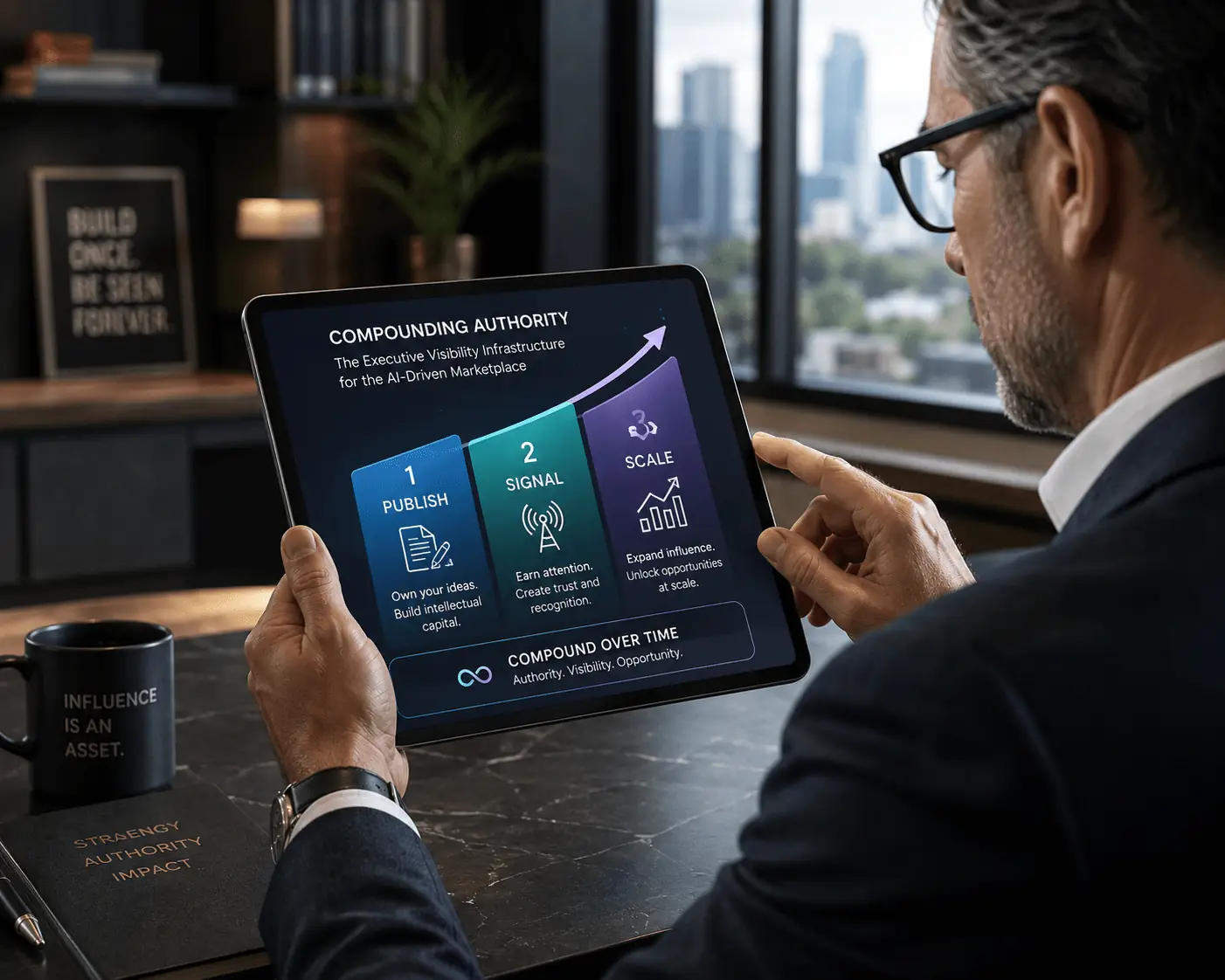
8. How can I use AI to strengthen my executive brand?
AI enhances scale, not substance.
Use it to optimize discoverability and consistency:
- Implement AI Visibility Strategy (structured content, schema, and clear messaging).
- Use AI tools for analytics, summaries, or idea expansion.
- Keep all messaging aligned with your brand positioning.
AI amplifies clear strategy — it doesn’t replace it.
9. How do I balance personal and corporate visibility?
They should work together.
When your personal and company brand align, they reinforce each other.
You’re not competing with your business — you’re humanizing it.
People trust companies more when they trust the leaders behind them.
10. What’s the first step to building my executive brand?
Start with clarity.
Define your leadership values, audience, and message before posting anything.
Then show up consistently — online, in conversations, and in decisions.
Your visibility should reflect who you already are.
Conclusion: Lead Visibly, Build Intentionally
Your executive brand is more than what you post — it’s how you lead in public.
When your visibility aligns with your values and results, you build not just influence, but legacy.
Visibility is credibility — and leadership is the medium.